Hardy Annuals vs. Heat-Loving Annuals: How to Have Blooms All Season Long
If you've ever planted a packet of flower seeds, waited patiently, and then watched them struggle to grow… there's a good chance you planted the wrong flower at the wrong time.
Don't worry. It happens to everyone!
But once you understand the difference between flower types, everything will click into place.
Not all Annual cut flowers are created the same!
Some annuals love the cold. ❄️
Some love the heat. 🔥
If you plant them at the wrong time, they will STRUGGLE.
If you plant them at the right time, they will THRIVE.
In this blog post, I’ll teach you about the 2 types of Annual cut flowers we grow on our farm and how we treat them very differently.
❄️Hardy Annuals: The Cool-Weather Lovers
Hardy Annuals are the early bloomers of the flower world.
They're frost-tolerant, cold-loving plants that require cool conditions to thrive. This group includes flowers such as:
Ammi / Dara
Bachelor Buttons
Bells of Ireland
Chinese Forget-Me-Not
Corncockle (Agrostemma)
Larkspur
Nigella (Love-in-a-Mist)
Orlaya
Pennycress
Sweet Sultan
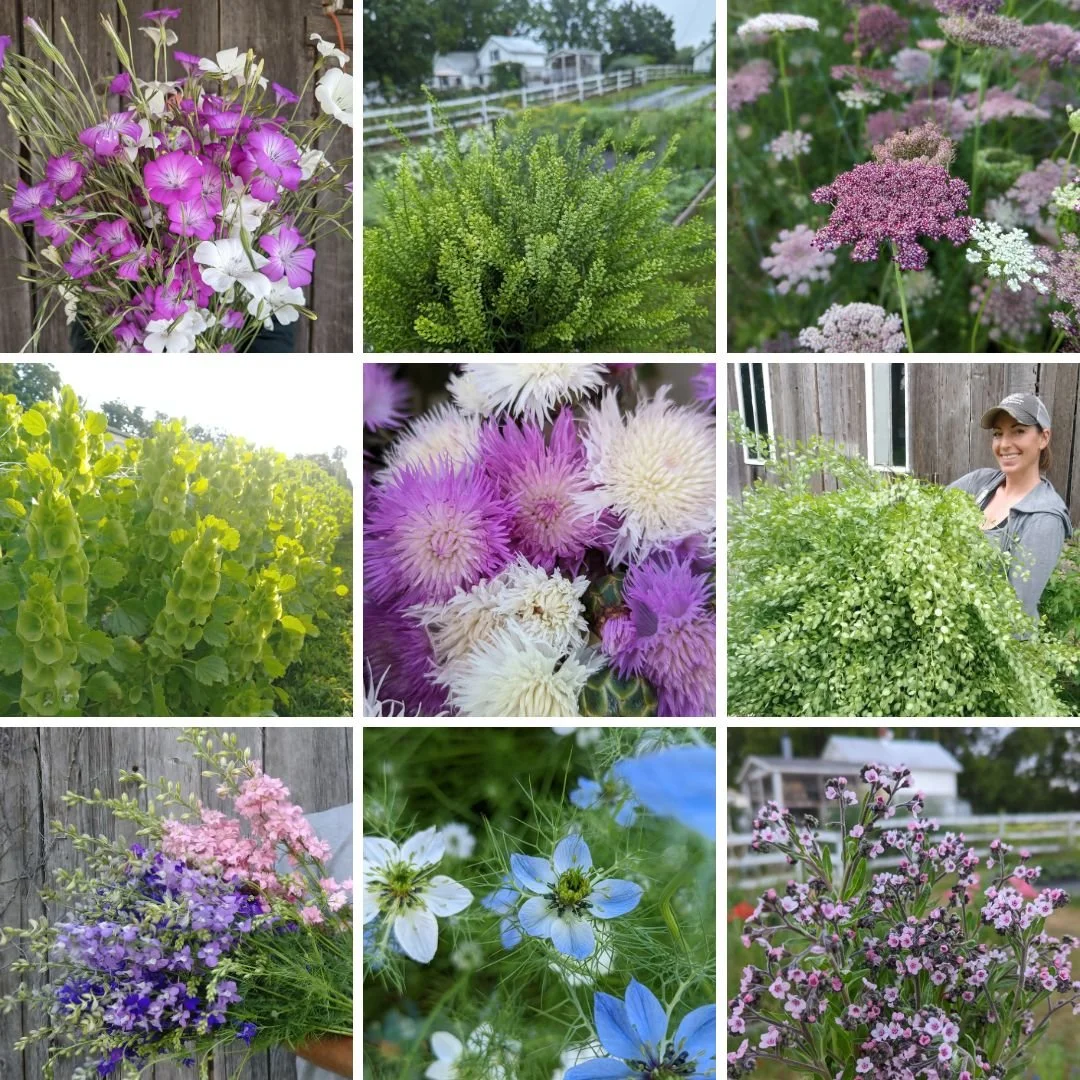
These flowers bloom in late spring and early summer, which typically is June here in Michigan (summer officially begins on June 21ish). Hardy Annuals are great because they help to fill the “Awkward Gap Season”, the time of year between spring bulbs (Tulips, Daffodils, etc) and the heat-loving summer annuals (Sunflowers, Zinnias, Celosia, etc).
But here’s the catch with Hardy Annuals: they have to be planted EARLY. Waaay earlier than you’d think! Depending on where you live and your climate, Hardy Annuals should be planted in the fall, winter, or very early spring (March and April).
The general rule of thumb is that Hardy Annuals should be planted 4-8 weeks before your average last spring frost.
Example: My average last spring frost is May 15. I need to plant Hardy Annuals between March 15 and April 15.
Yup, the weather is likely going to be cold. You might still be getting snow, sleet, and everything in between (the kind of weather that makes it miserable to be outside!). That’s ok. Hardy Annuals adore cold, wet weather.
If you wait until the weather is warm and pleasant to plant them? You've already missed the window. So sad! Trust me. You’ve got to get out there when it’s cold, wet and muddy. Miserable for you, but perfect conditions for them!
By the time summer heat rolls in, Hardy Annuals are declining. They are NOT heat-tolerant, and they will start dying when it gets too hot (if I were a flower type, I’d 100% be Hardy Annual. I also wilt and feel like I’m dying in hot weather. Ha!).
Most Hardy Annuals are done blooming and going to seed by mid-July.
If you've had bad luck with Hardy Annuals in the past, you likely planted them too late.
[Want to learn my favorite method for planting Hardy Annuals? Read all about the S.T.U.N. Method here]
🔥Heat-Loving Annuals: The Summer Stars
On the flip side, we have the Tender Annuals, or as I like to call them, the Heat-Loving Annuals.
These plants cannot tolerate frost, and they won't really get going until the weather warms up.
There is no point in trying to plant these Heat-Loving Annuals earlier. They will sulk and pout in cooler weather. They want HOT weather, not cool spring weather.
We plant them after our average last spring frost (around May 15 here in Michigan, with many people aiming for Memorial Day weekend), but I find the seedlings that I plant in June and July (when it’s HOT!🔥) grow even better and faster than the ones planted in May.
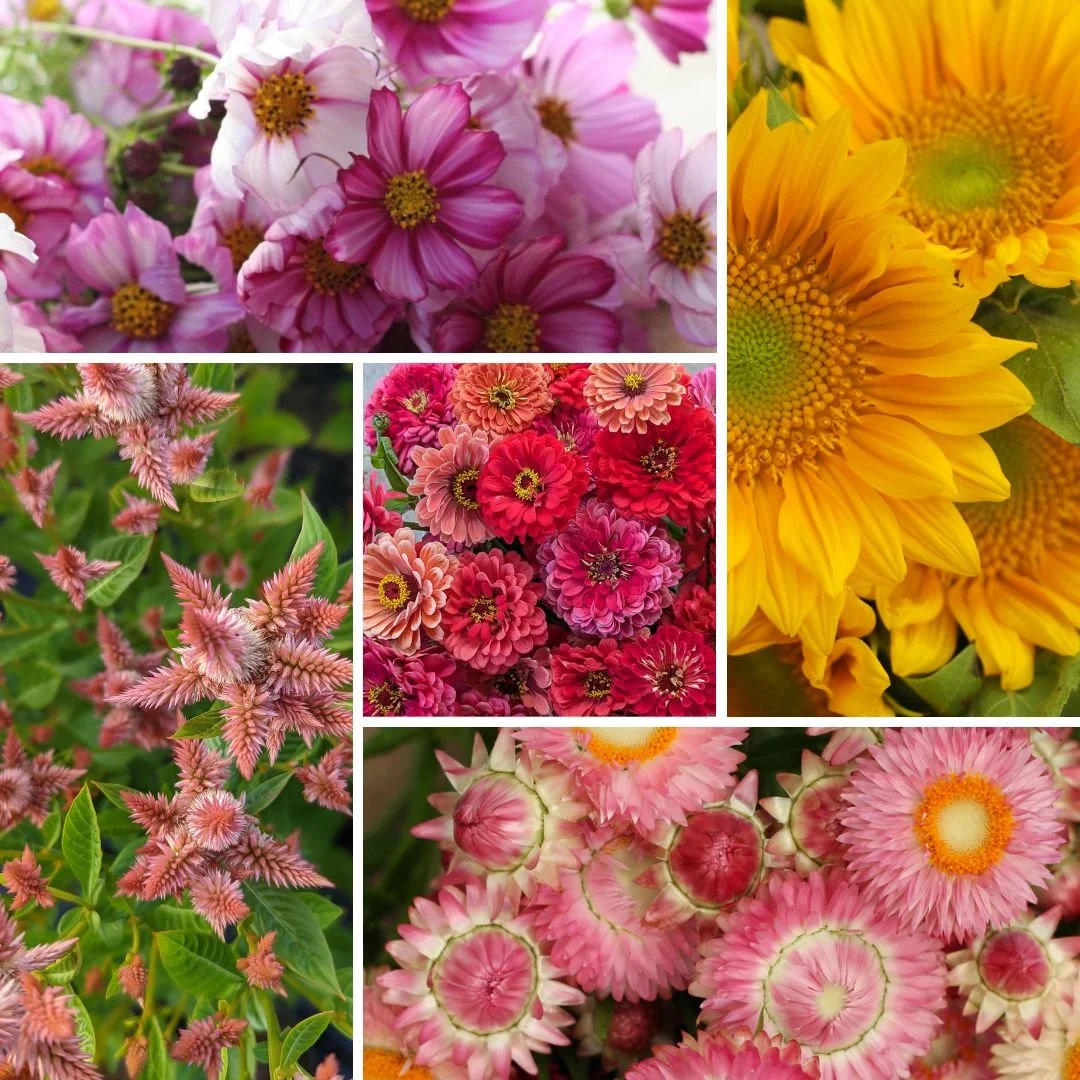
Here are some Tender Annuals that thrive in the heat of summer:
These flowers begin blooming in midsummer (July) and keep going strong right through September. They're your workhorse summer bouquet flowers.
“Flipping beds”, a.k.a. Using every square inch of your planting area
Now that you know about the difference between Hardy Annuals and Heat-Loving Annuals, let me share a great tip.
On our farm, every square inch matters. So instead of letting our Hardy Annual beds sit there taking up space after they start to decline in July, we flip the beds.
“Flipping beds” means removing one crop and replacing it with another crop, to ensure that the growing bed is as productive as possible.
In mid-July, we rip out or cut back the Hardy Annuals and immediately plant trays* of heat-loving Annual transplants into those same beds (if your growing season is long enough, you could even simply direct sow crops like Cosmos, Sunflowers, and Zinnias!).
The Hardy Annuals give us beautiful blooms from June through early July.
The Tender Annuals bloom August through October (until our first fall frost).
This is the beauty of growing Hardy Annuals AND Heat-Loving Annuals. You can grow them in the same location, since they bloom at different times.
*This method DOES require planning ahead. We know we’ll want to plant Heat-Loving Annual seedlings around July 15, so we count backwards about 4-6 weeks and make a note on the calendar to start seeds around early June so we’ll have transplants ready to go.
Timing Is Everything: A Simple Rule of Thumb
Timing is SO IMPORTANT.
These plants are easy to grow IF they are planted at the correct time of year.
❄️Hardy Annuals → Plant 4-8 weeks before your average last spring frost. For many of us, this means late winter or early spring.
🔥Heat-Loving Annuals → Plant after your average last spring frost, once the threat of frost has passed. The warmer the weather, the faster and better they will grow.
If you plant Hardy Annuals too late, they won’t thrive.
If you plant Heat-Loving Annuals too early, they won’t thrive.
Plant the right flowers, in the right season, at the right time?
Success!
Tips for Beginners
Tip #1
If you’re an absolute beginner, I recommend starting with Heat-Loving Annuals. These plants are so easy to grow.
Once you feel more confident, you can explore the world of Hardy Annual flowers. These plants are also easy to grow, but getting the timing right is trickier.
Most people have a really hard time wrapping their heads around planting so early in the season! They are worried that they are going to kill the Hardy Annuals by planting them too early… when in reality, the thing that kills them is planting too late.
It can be very difficult to trust the process!
Tip #2
Many Hardy Annuals prefer to be direct sown right into the garden. In fact, some of them perform very poorly when transplanted.
I highly recommend direct sowing:
Larkspur
Nigella (Love-in-a-Mist)
Orlaya
Pennycress
Peppergrass
Tip #3
Plants germinate and grow faster when planted around the Summer Solstice. June 21ish is the longest day of the year, with the most available sunlight.
When I direct-sow Zinnia seeds on May 15, it takes about 75 days for the plants to germinate, grow, and bloom.
When I sow Zinnia seeds around the Summer Solstice, they germinate, grow, and bloom in about 45 days!
Take advantage of those long days and don’t be afraid to sow/plant later than you think you can!
Ready to plant?
Check out a selection of our favorite, top performing cut flower seeds.