How to Plan a Cutting Garden Layout (Without Overthinking It)
You've been dreaming about it for years. Rows of beautiful blooms, armloads of Cosmos and Zinnias, mason jars overflowing with cheery Sunflowers on every surface of your house.
So why haven’t you planted your garden yet?
Let me guess.
Every time you sit down to plan it, you end up in a rabbit hole of Pinterest boards, YouTube videos, and dreamy Instagram reels… and three hours later you're more confused than when you started.
Sound familiar? I’ve done it too, friend!
Here's the good news: Your cutting garden does NOT need to be fancy or Instagram perfect. In fact, planning a cutting garden layout can be simple when you have some guidelines.
And in this post, I'm going to give you some of my best suggestions for getting your garden planted THIS year, not “someday”.
Let's do this!
The One Thing Your Cutting Garden Can't Live Without: 6 Hours of Sun
Let’s start with the most important thing. Before we talk about rows, pathways, and any of the fun stuff, we have to talk about the sun.
Your cutting garden needs a minimum of 6 hours of direct sunlight per day. Full sun is even better. This is truly a non-negotiable when it comes to cut flowers.
Too shady? You'll get leggy, floppy plants with few blooms. [Insert sad trombone noise]
Everything else in this post is a suggestion… but adequate sunlight is not.
So before you do anything else, walk your property and find your sunniest spot.
You might have to get creative. I know plenty of dedicated growers who only get sun in their driveway, so they build garden beds in their driveway! Others may need to ask a friend, family member, or neighbor if they can use part of their yard. Or maybe you rent a plot at a community garden. There are endless options!
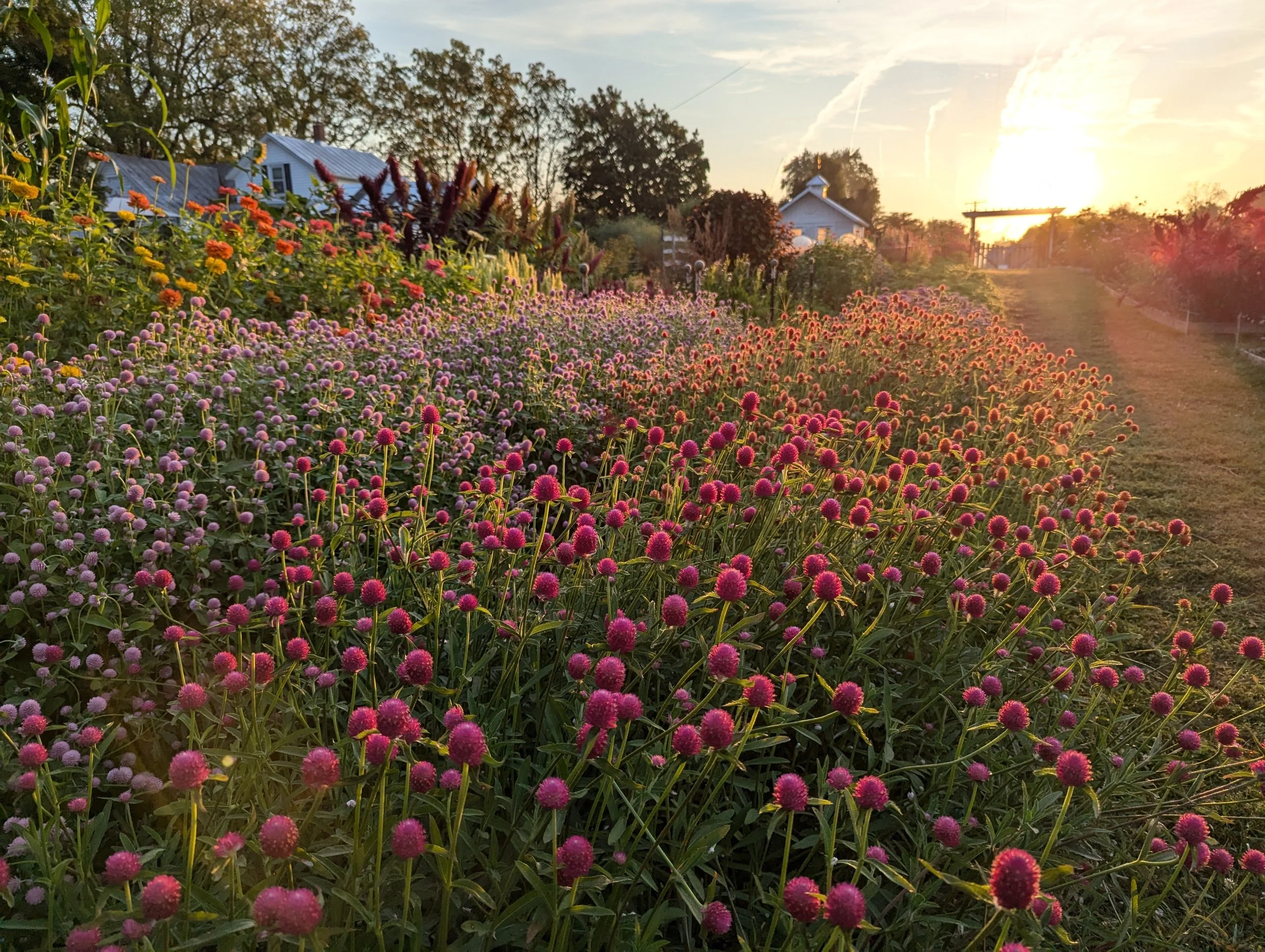
Full sun = happy cut flowers
How Big Should My Garden Be?
Great question.
I always recommend starting small and expanding the following year, if you feel ready.
Why? I see lots of people with ambitious plans in the spring… but by early summer, they are drowning in weeds and give up on their dream garden.
You can grow a ridiculous amount of flowers in a small space. Start with a few rows/beds that are roughly 3ft x 12ft and see how it works for you.
I’d rather you have a beautiful, enjoyable, and manageable space than burn yourself out in less than 2 months.
Which Direction Should Your Cutting Garden Rows Run?
Okay, I get this question all the time.
Should my rows run north to south? East to west? Does it even matter?
Here's my answer: it doesn't really matter.
I know, I know. You were expecting a definitive answer… but there isn’t one. Every grower is working with a different space and has to figure out what works best for them.
One thing you can consider is how much wind your plants will be exposed to.
For example, our fields are very windy, and the wind usually comes from the west, so we plant our rows east to west, so the wind can blow along the rows, instead of blowing the rows over.
But in the end, the direction of your rows is far less important than simply getting them in the ground. Work with the shape of your space, and don't let this one detail hold you back.
How Wide Should Cutting Garden Rows Be?
Three feet. That's our magic number.
Three-foot-wide rows are the sweet spot for a cutting garden. This width is wide enough to fit a LOT of plants in a small space, while also narrow enough that you can reach the center from either side without throwing out your back (please trust me on this one. I grow flowers for a living, and it’s important to have good posture and body mechanics when you’re harvesting to prevent injuries!).
If you're working with raised beds, aim for the same. 3 feet across is the ideal working width for most gardeners.
Don't Skip the Pathways in Your Cut Flower Garden
When you’re short on space, it can be tempting to skimp on pathway space.
I’ve made this mistake before. I wanted to dedicate as much space to flowers as possible and figured I could “cheat” with an 18” wide pathway.
Disaster.
By mid-summer, it was impossible to navigate the pathways without damaging the plants and blooms. There was no room to move, weeding was a nightmare, and every time I bent over to harvest flowers, I ended up knocking over plants in the row behind me... with my butt. How embarrassing. Ha!
Your cutting garden pathways should also be 3 feet wide. Yes, 3 full feet. And no, that's not wasted space.
Listen, you're going to be out in that garden a lot. Harvesting, weeding, watering, and admiring your hard work. You need room to move around comfortably with a harvest bucket in one hand and your clippers in the other. A 3-foot-wide pathway also accommodates most wheelbarrows or garden carts.
Wide pathways = a garden you actually enjoy working in.
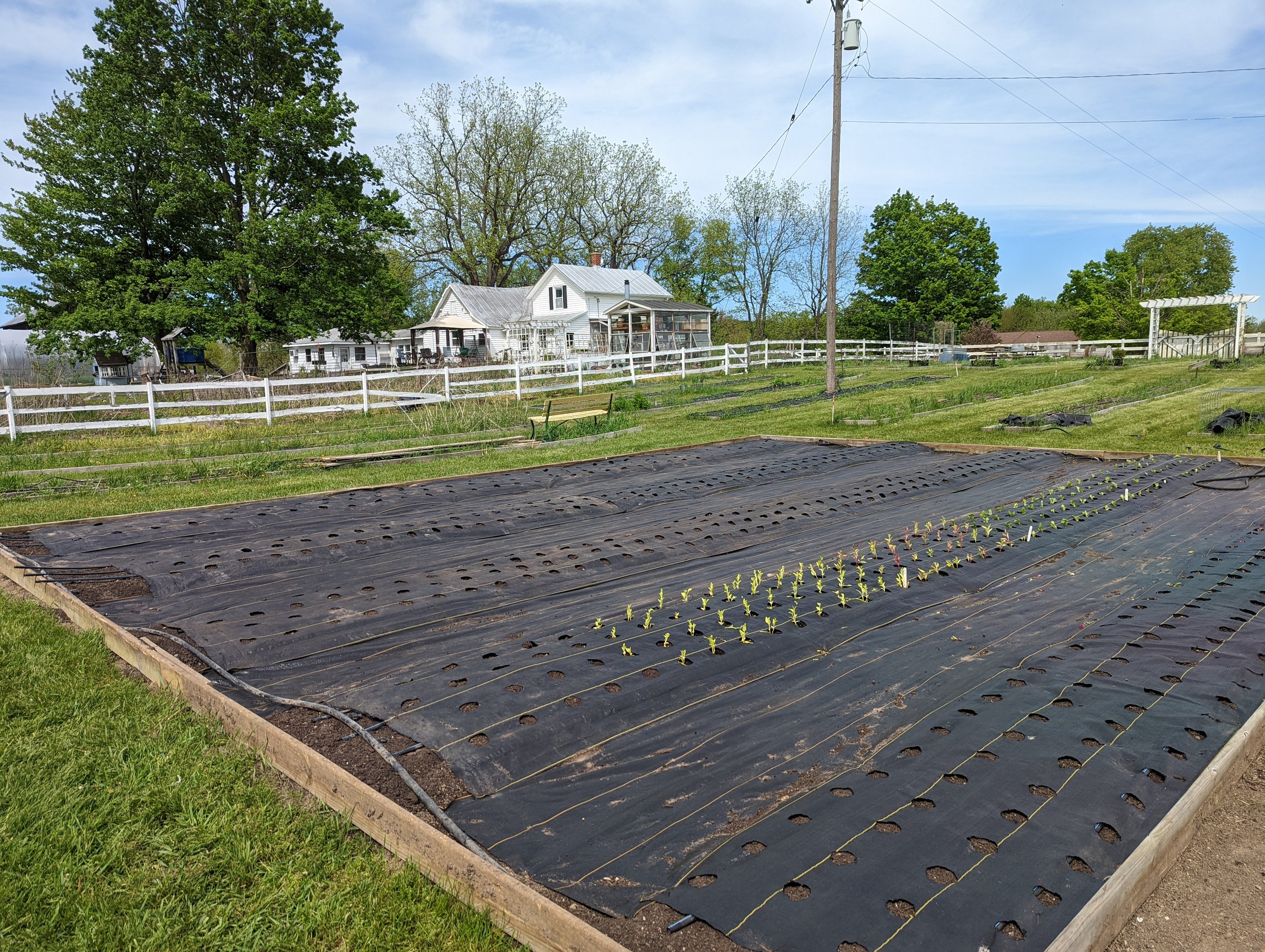
3 ft wide beds and 3 foot wide pathways at planting time on May 15…
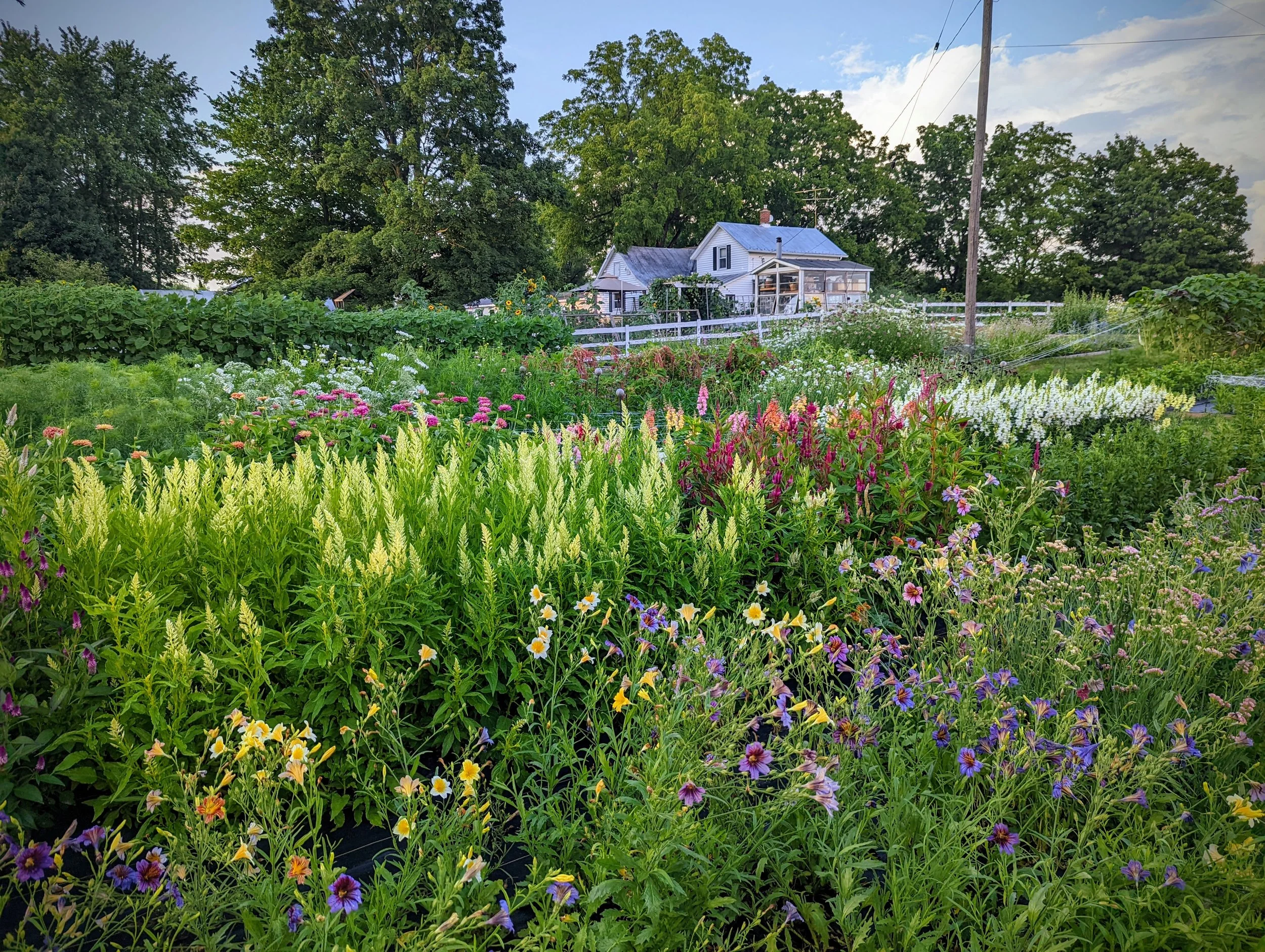
…the same area, just 2 months later! You can see why the 3 ft wide pathways are necessary.
How to Organize Your Cutting Garden: Tall Plants Go North
Here's one of my favorite cutting garden layout tips. You better believe I learned this one the hard way. Ha!
Always plant your tallest flowers on the north end of your garden.
Why? Because tall plants shade out shorter ones. If you plant your 6-foot sunflowers on the south end of your garden, the shorter plants behind them don't stand a chance. Remember that rule about 6 hours of direct sunlight?
By placing tall flowers on the north end of the bed, you allow the sun to reach all your plants evenly throughout the day. Everybody wins.
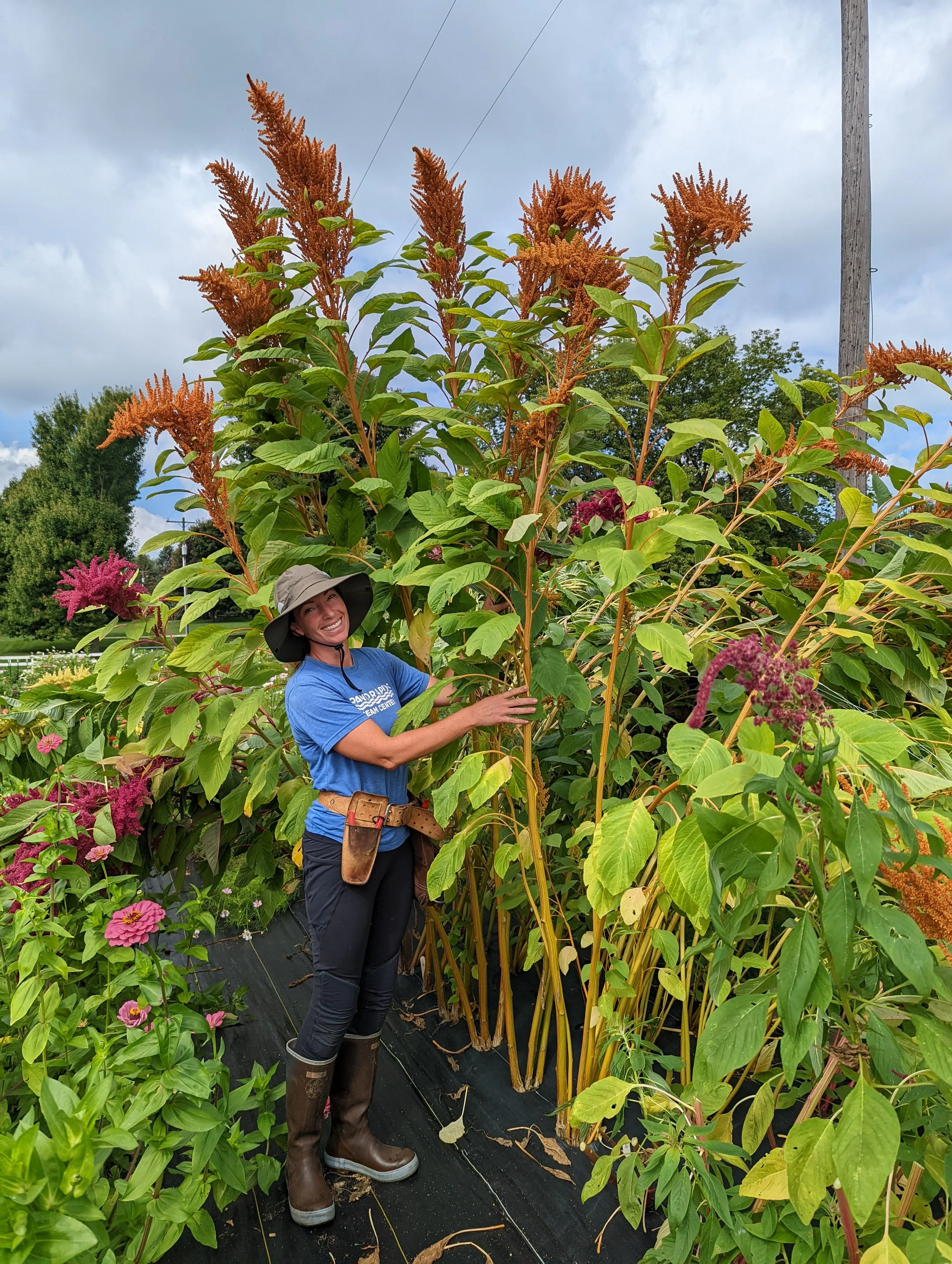
Amaranth gets HUGE so it always goes in the north end of the planting space so it’s doesn’t shade out the other flowers!
Cut Flower Spacing Guide: One Number to Rule Them All
When I started growing cut flowers, I stressed over plant spacing. I wanted to make sure I was doing it “right” and obsessively studied the seed packs.
I ended up doing way too much complicated math and planning.
After over a decade of trying multiple spacings, it turns out the vast majority of cut flower annuals thrive at 9-inch spacing.
We plant 90% of our annuals at this spacing, and it makes planning so much easier. Zinnias, Snapdragon, Celosia, Statice, Ageratum, Scabiosa, Strawflower, China Aster… all at 9 inches.
The few exceptions?
-We still plant Cosmos at 12 inches.
-Dahlias can be planted from 12 to 18 inches, depending on the variety (size can vary a lot!).
-Single-stem Sunflowers thrive at 6-inch spacing, while branching Sunflowers need 12-18 inches.
Isn't that refreshing? One number to remember, and most of your garden is covered.
NOTE: When you are planting flowers for a cutting garden, the suggested spacing on the seed pack is just that - a suggestion. I almost always recommend planting them closer than suggested, since this encourages the flowers to grow taller and straighter.
Succession Planting for Beginners: How to Have Blooms All Season Long
Have you ever had a garden that was absolutely gorgeous for two weeks… and then it fizzled out?
That's what happens without succession planting.
Succession planting simply means staggering your plantings so that new flowers are always coming into bloom. Instead of planting everything at once and having a big flush of color followed by a whole lot of nothing, you plant in intervals (every 2-3 weeks) so the harvest keeps coming.
It doesn't have to be complicated. For beginners, I recommend planting 2-3 successions, spaced about 2-3 weeks apart.
This is what it looks like in practice: You plant half of your seedlings and seeds on a certain date. Then, 2-3 weeks later, you plant the rest of your garden.
This will ensure you have months of blooms, instead of just a few weeks.
You can learn more about Succession Planting and how I do it HERE.
Sketch Out Your Cutting Garden Layout (Even Badly)
Okay, I know some of you are already breaking out the graph paper. (Hello, fellow nerds.🤓 I see you. You are my people)
And some of you are thinking, "I’m just gonna wing it and plant some stuff."
Hold up. I love your enthusiasm, but we do need a plan.
It doesn't have to be fancy. A rough sketch on the back of a grocery list is fine. The point is to get your ideas out of your head and onto paper so you can actually see what you're working with before you start digging.
Map out your rows, your pathways, your tall plants on the north end, and roughly where each flower variety will go.
This is not an art project, and you’re not being graded. Even a bad plan is better than no plan at all.
And guess what? You probably won’t stick to your plan, but that’s ok.
The process of planning is what’s important. The process helps you figure out where things could go awry ahead of time.
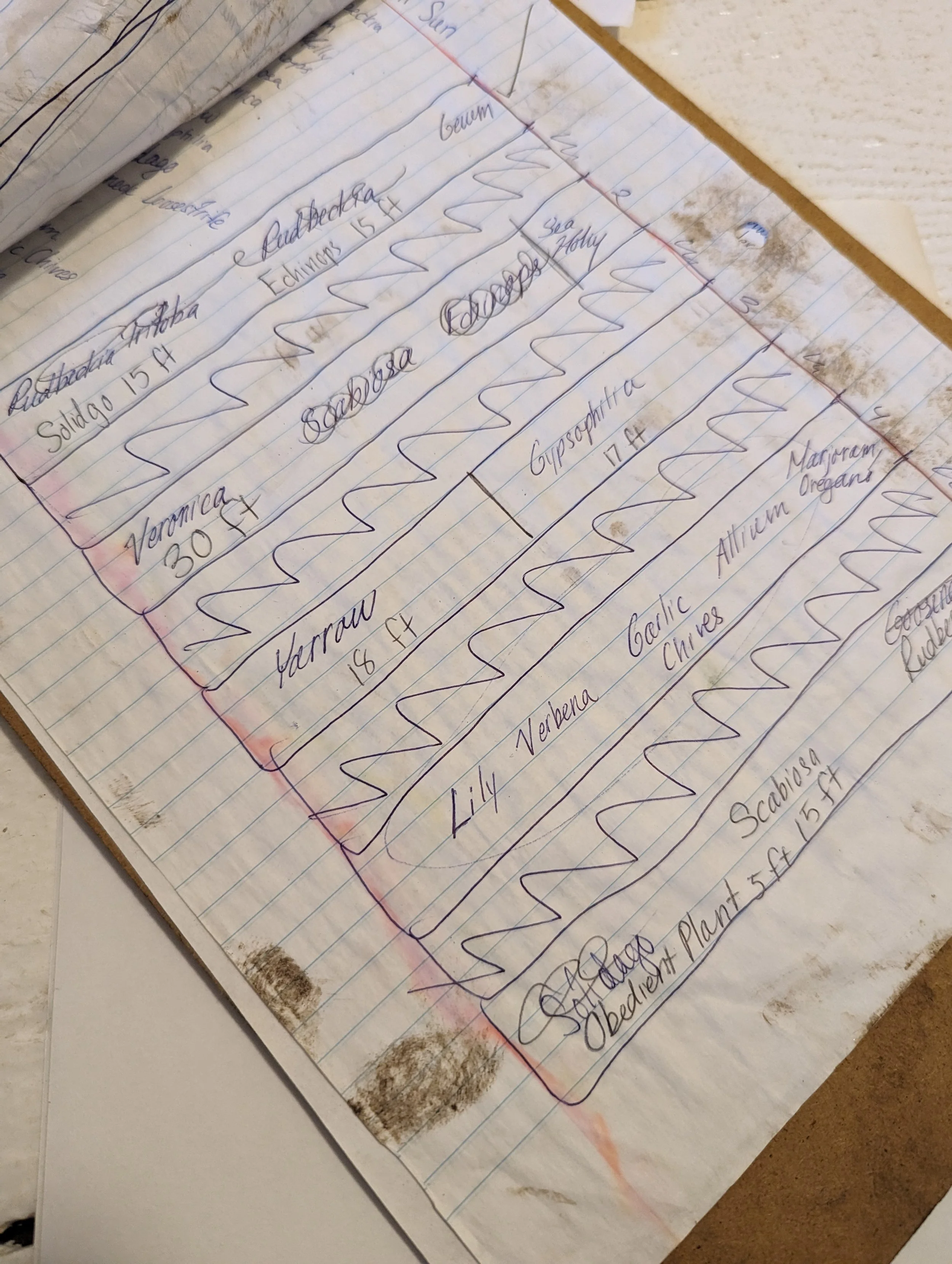
An example of one of my rough sketches, complete with misspelled words, dirt and coffee stains. Ha!
The Best Cutting Garden Layout Is the One You Actually Plant
Here's my final piece of advice, and probably the most important: Done is better than perfect.
The best cutting garden layout isn't the one with the most precise measurements or the most elaborate plan. It's the one that gets planted and enjoyed.
On our farm, our favorite phrase is “Next year is going to be great!” 🤣
You’ll never, ever have a perfect garden. You’ll always make changes and improvements.
You’re going to mess up. You’re going to have failures.
That’s all ok! Because next year’s garden is going to be great, right?
Now stop overthinking it and go plant something! 🌸
-Lori
Ready to go deeper? My online course, Backyard Cutting Garden 101, covers everything you need to plan, grow, harvest, and arrange your dream cutting garden. Click below for all the details!