The S.T.U.N. Growing Method for Hardy Annuals
Have you ever heard of the "S.T.U.N." growing method?
It's my favorite method ever!
I was first introduced to this method in the book Restoration Agriculture by Mark Shepherd.
Mark highly recommends this approach for a variety of crops, and once you understand what it stands for, you'll see why it's perfect for overwhelmed flower growers:
S - Sheer
T - Total
U - Utter
N - Neglect
Yes, that's right, folks, there are some plants out there that actually THRIVE on neglect!
In fact, I've discovered that the harder you try to grow them (pamper them, fuss over them), the worse they do!
The Flowers That Love to Be Ignored
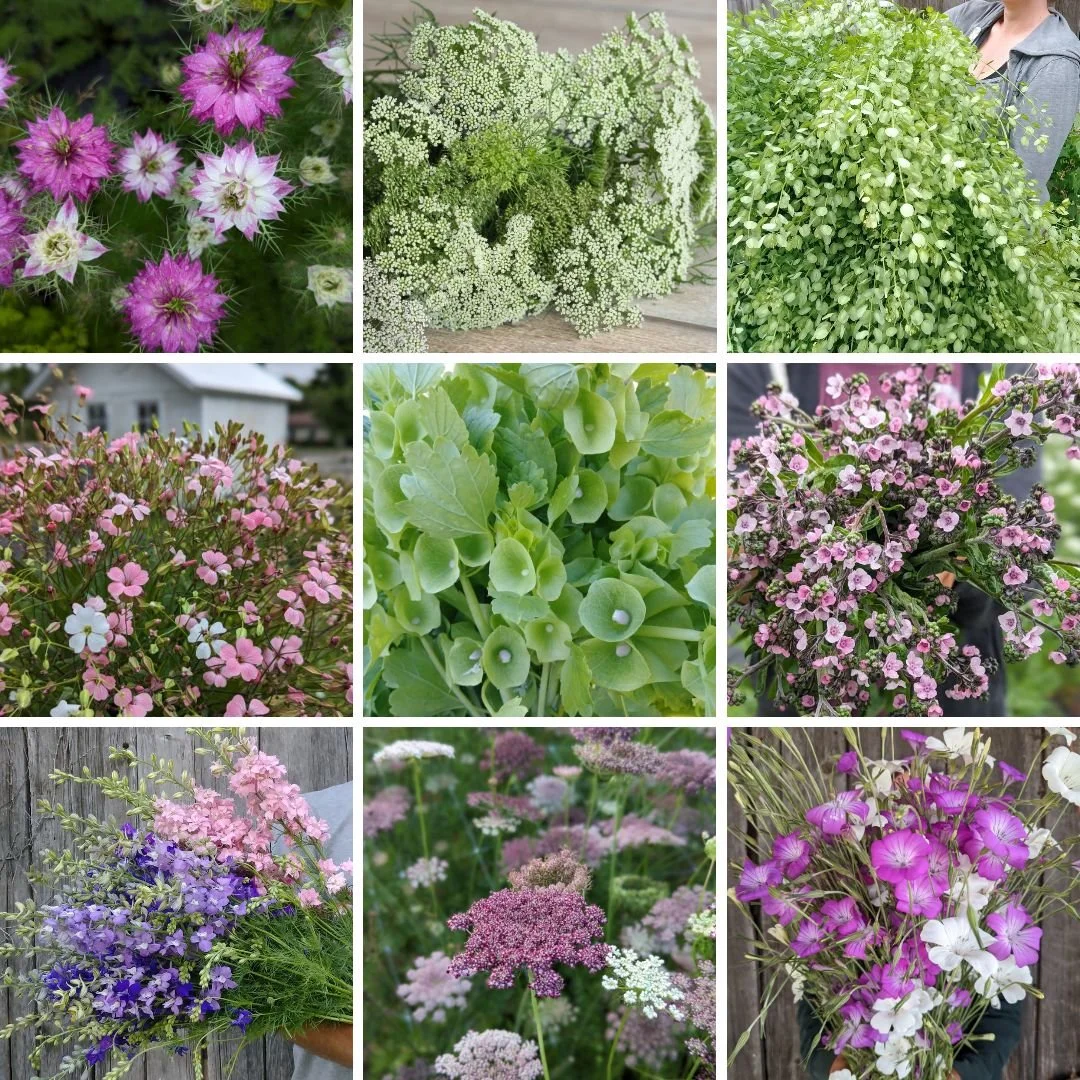
Over the years, I've discovered that many Hardy Annual cut flowers absolutely love the "S.T.U.N." growing method. These include (but are not limited to):
Agrostemma (Corn Cockle)
Ammi/Dara
Bachelor Buttons
Bells of Ireland
Chinese Forget-Me-Not
Larkspur
Nigella (Love-in-a-Mist)
Orlaya
Pennycress
Saponaria (Soapwort)
Sweet Sultan
What Makes Hardy Annuals Different?
Hardy Annuals are frost/freeze-tolerant, and they actually perform BEST when sown and grown in cool weather.
Most of them also don't like to be transplanted, so direct sowing them where you want them to grow often works better than transplants. (My transplanted Hardy Annuals are ALWAYS shorter and less productive than the direct-sown plants. Every. Single. Time.)
How to Embrace the S.T.U.N. Method
My best advice for growing Hardy Annuals?
Embrace the "S.T.U.N." growing method and mimic how they grow in nature.
Instead of trying to fuss over them in trays indoors, go outside and sow the seeds either in the fall, winter, or early spring.
Last year, I direct sowed all my Hardy Annuals in February, when we had a thaw. I literally sprinkled the seeds where I wanted them to grow.
After sowing them in February, I did absolutely nothing to care for them. I just let nature do the work. The seeds were rained on, snowed on, sleeted on… and when the time was right, they germinated and grew.
In June, I had rows and rows of beautiful blooms to harvest… all because of the "S.T.U.N" growing method.
Your Turn
Give it a try and I think you'll see why I love it so much!
Sometimes the best thing we can do for our gardens (and ourselves) is to step back and let nature handle it.*
*Revolutionary concept, I know.