Why Aren’t My Dahlias Blooming Yet?
It’s time for my Annual Summer Dahlia Public Service Announcement!
If you've been staring at your Dahlia patch lately, wondering why you don’t see any blooms yet…
Relax. Take a deep breath.
Nothing has gone wrong.
Every single summer, right around this time, my inbox fills up with some version of the same panicked message: "My dahlias are healthy, but there's not a bloom in sight. What am I doing wrong?"
Friend, you're not doing anything wrong. You're just impatient. (No judgment here; I am too.Ha!)
Dahlias Are Fall Blooming Flowers
When you’re buying and planting tubers in the spring, it’s easy to forget something important: Dahlias are fall-blooming flowers. You wishing they would bloom earlier does not change this fact (I know. It’s hard to hear that. I keep wishing they would bloom earlier every year!).
Expecting them to bloom in early summer is like expecting a Tulip to bloom in the fall (it CAN theoretically be done, but requires a lot of light and temperature manipulation, which is just as complicated as it sounds).
Most Dahlias take somewhere between 12 and 16 weeks from planting to their first bloom. So if you tucked your tubers into the ground in mid-May, as a lot of us in Zone 5B did, you're looking at your first blooms somewhere between mid-August and mid-September.
Not July. Maybe not even early August… although there are sometimes outliers that show up to the Dahlia party earlier!
Here's how the season tends to unfold:
Late July: Maybe a few early, overachiever blooms
August: Things start picking up steam as the month goes on
September: Peak dahlia season, my favorite month of the entire year!
October: They keep blooming their fool heads off until they get hit by a killing frost (usually around Oct 15, but sometimes as late as November!)
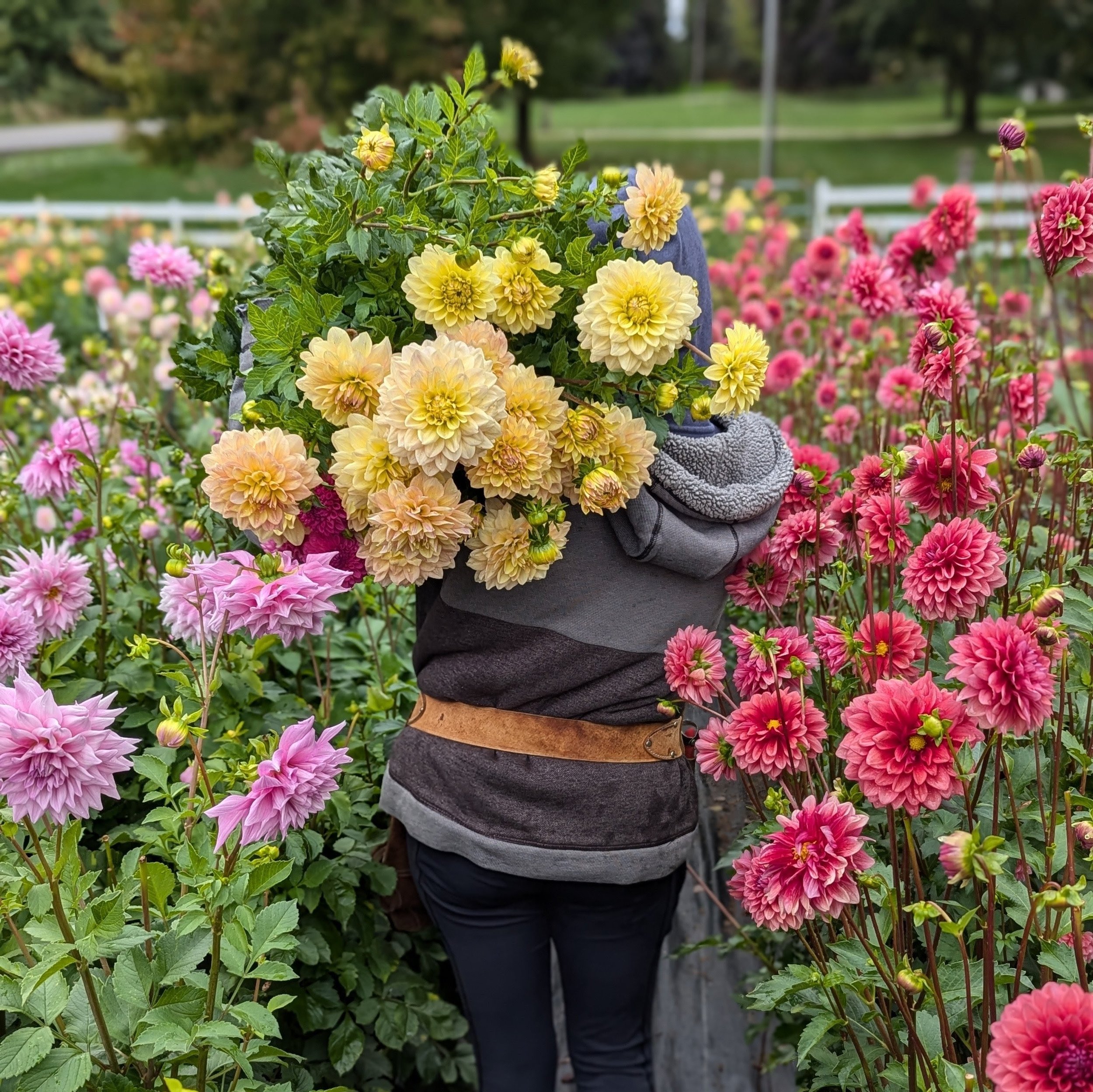
Dahlia field on Oct 7
Some nerdy science stuff…
This is the part I find fascinating, so bear with me for a second.
Dahlias are what's called "facultative short-day plants." That's just a fancy way of saying they prefer shorter days, and they hit their blooming stride when daylight length drops to somewhere around 12 to 13 hours.
So during the long days of summer, the Dahlia is putting its energy into growing. You’ll see a lot of leaf growth during the summer, and this is the time to make sure your plants are getting all the food and water they need to grow.
Once the days start shortening in late summer and early fall, something shifts. The plant gets the signal that the growing season is winding down, and it shifts into reproduction mode… which means it’s time to start sending up flowers, which will be pollinated by bees, go to seed, and start the circle of life all over again.
What Daylight Looks Like on Our Farm
If you're gardening near Grand Rapids, Michigan, sitting up around the 43rd parallel like I am, here's roughly how our daylight hours shift as summer turns to fall:
End of July: About 14.5 hours of daylight
End of August: Around 13 hours
End of September: Around 12 hours
End of October: Around 10 hours
Once we drop into that 12–13 hour range, that's when the Dahlias really take off.
If you're gardening somewhere else, your exact daylight numbers will look a little different depending on your latitude, but the pattern holds everywhere: shorter days trigger the bloom.
Other factors affecting bloom time…
Daylight length is the main driver, but a few other factors matter too.
Temperature matters. Dahlias like warm days and cool nights. If your area has been stuck in a stretch of brutal heat (we feel you), your Dahlias are probably sulking a little. They tend to perk up once temperatures ease off. If you live in a hot southern climate, your Dahlias might not bloom until mid-fall (October or November). This is one case where Northern growers might see blooms BEFORE their Southern growing friends (because it’s cooler in the north and the Dahlias stop sulking)!
Food and water matter, too. Dahlias are hungry, thirsty plants. If you've been slacking on feeding and watering (it happens!), now is a great time to get back on a regular schedule. Your plants will appreciate it. We use nitrogen-based fertilizer during the growth stage, then switch to a phosphorus-based fertilizer when we see the plants setting buds.
Perspective From Our Own Field
If it helps to know you're not alone in this: we currently have about 2,000+ dahlia plants on our farm, and as of today, July 29, 2026, I’ve harvested exactly three blooms.
Three. Out of two thousand plants.
We've been fighting drought and seriously oppressive heat this summer, so our Dahlias are not happy campers right now.
This gorgeous Dahlia photo? It was taken in early October, when the plants were thriving during the warm days and crisp, cool nights.
So if your Dahlia patch looks like a sea of green right now, you're in good company… and nothing has gone wrong.
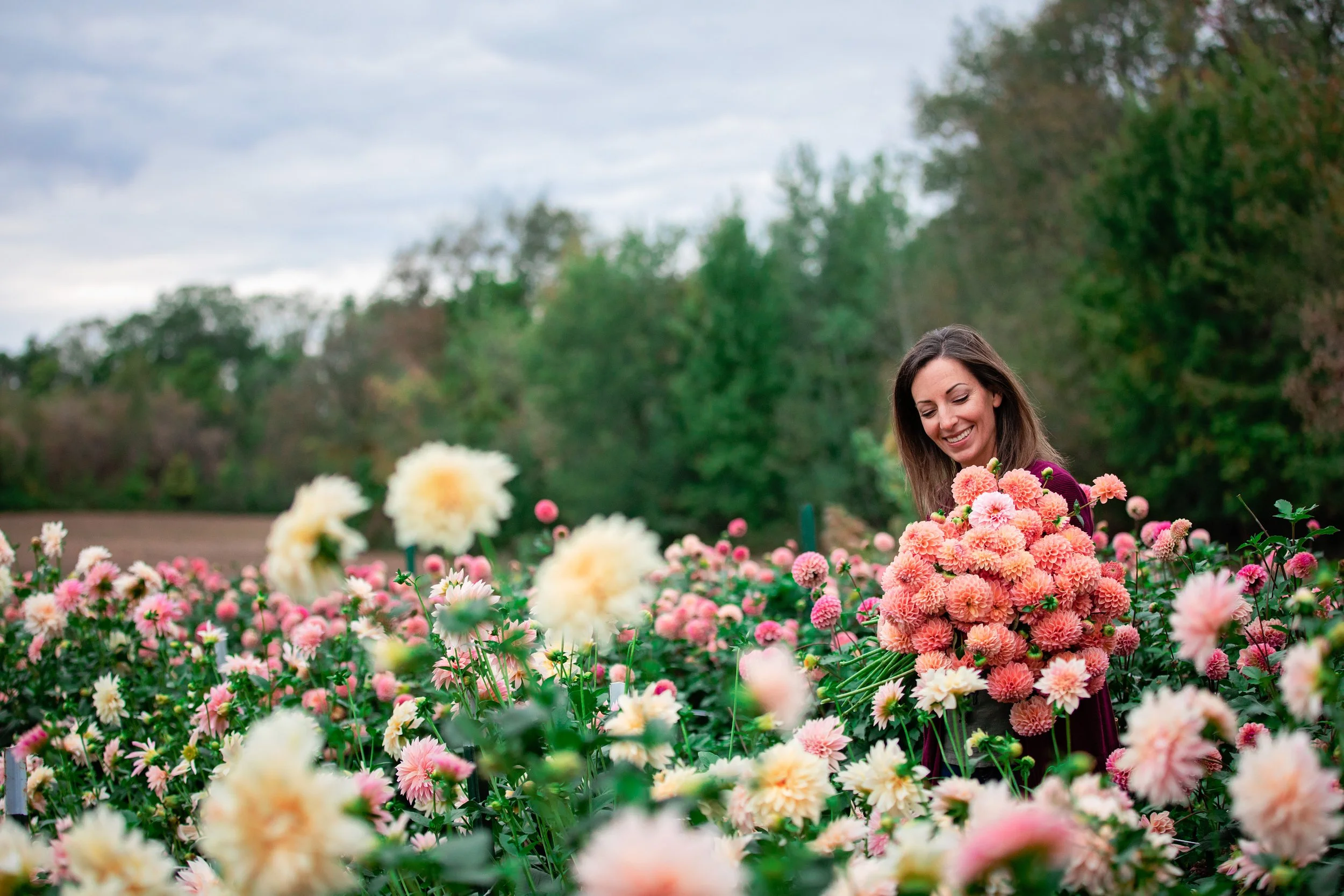
Dahlia Field on Oct 10
The Bottom Line
Dahlias bloom most prolifically as the days shorten toward the fall equinox. That's simply how they are designed.
Be patient. Keep watering, keep feeding, keep weeding.
I promise you’ll be rewarded in the fall!
Ready for more?
🌸The Dahlia Quick-Start Handbook🌸
Grow stunning blooms your first season… without the overwhelm.
A warm, practical, and personable guide that walks you through your entire first dahlia season, from planting day in the spring to digging tubers in the fall.
Written like I'm sitting at your kitchen table with you, not lecturing you from a podium.